Book Review:
A Book Review
By Eugenia Parry
“The dose makes the poison.”
– Paracelsus, Swiss physician, alchemist, lay theologian, and philosopher of the German Renaissance
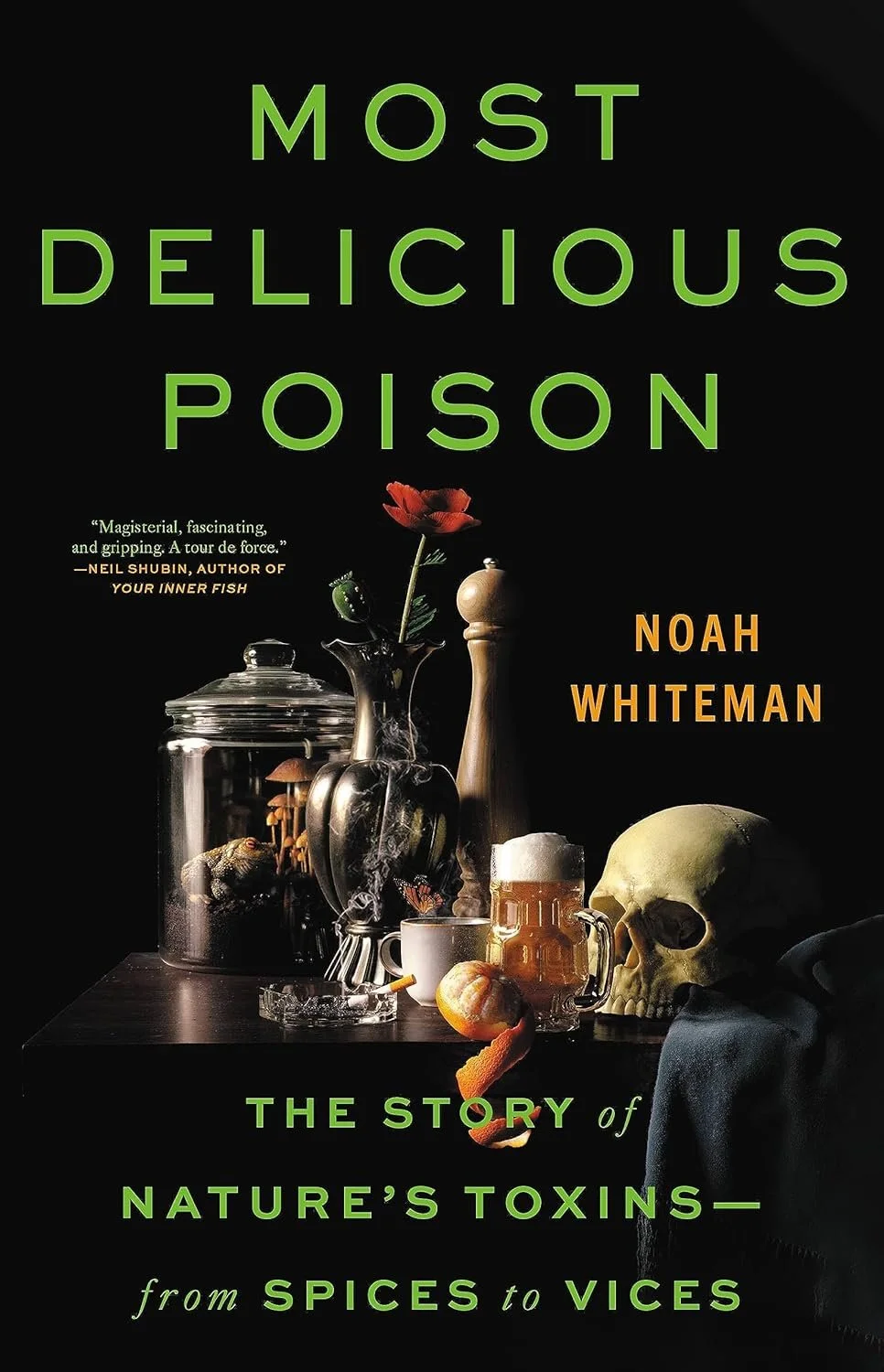
This magisterial book is a daunting compendium, burdened at times by polysyllabic mouthfuls, like dimethyltryptamine or DMT. It’s also absorptive reading because the author interweaves clear observational science with details from his own life’s story. He can’t help exploring his feelings. His subject requires it.
Professor Noah Whiteman is an eminent evolutionary biologist. His professional responsibilities, achievements and honors make a staggering list. His zeal – equally staggering – makes this book (his first) a toxic treasure. He likes letting us know that the attractive plants, including the St. John’s Wort that a florist innocently assembled for Whiteman’s wedding boutonnière, were lethal.
A leitmotif in these pages is the author’s struggle to understand the mystery in the chemicals that killed his wayward, alcoholic father, found dead and abandoned in a trailer park. Once a beloved guide, this parent trained his son’s eye and instilled the kind of curiosity that scientists live for. As the author confesses, “My salve in all the seasons of my life was to get lost in whatever page of the book of nature was open, as macabre as the setting was.”
Thirteen chapters offer a bevy of poisons – good and bad – that show up in our daily lives, often on our fingertips: deadly daisies; toxic, titillating, tumor-killing terpenoids; caffeine and nicotine (the author confesses to a serious caffeine addiction, exploring the chemistry of a perfect cup of coffee); abiding alkaloids; forests of phenolics and flavonoids; and opioid overlords. These are no side show, Whiteman assures us. They’re the main event. Nature’s pharmacopoeia did not evolve for our benefit. We’ve appropriated it. Gardeners! Pet that toad? Wash your hands!
Paracelsus pondered, knowing like all alchemists what a losing game these quests could be. By contrast, Whiteman refers continually to evidence that Indigenous cultures successfully used poisons for harm and benefit, largely from tropical plants, for millennia. Bufotenine, an alkaloid, was found in the hair of 1,500-year-old Chilean mummies. In a notable part of his text, the author tries to repair Western science’s abiding ignorance about this fundamental work in the culture of toxins.
This is a book of wonderment that probes deeply. It wants us to know how plant toxins influence strange behavior in insect brains: that black-backed orioles gorging on monarch butterflies selectively dissect them to avoid the toxins, that some savvy pollinators cheat by boring holes at the base of a flower to steal nectar there because it’s easier and that some nontoxic plants turn toxic when they are injured.
Based on work with colleagues all over the world, the author presents chemical dramas that save lives and destroy others. He finds evidence for the blur between medicinal and spiritual among cultures that regularly use alkaloids. But he goes further. He reveals secrets. He startles us with knowledge.
Republished from the May 2024 SFEMG Newsletter